Building a house or commercial property in Ghana is one of the most significant financial decisions you will ever make. Whether you are constructing a family home in Accra, a guesthouse in Kumasi, or a commercial block in Takoradi, one of the very first steps, and often the most overlooked is obtaining a professionally drawn building plan.
A building plan, also known as architectural drawings or construction drawings, is a detailed set of technical documents that describes what a building will look like, how it will be structured, and how it will be built. It is prepared by a licensed architect or draftsperson and serves as the master blueprint for every stage of your project.
Yet many Ghanaians ask: How much does it cost to draw a building plan? And more importantly — is it worth the cost? This guide answers these questions in full, breaking down what goes into the cost of a building plan in Ghana, why the investment is non-negotiable, and what happens when you skip it.
Significance of a Building Plan
1. To Your Project
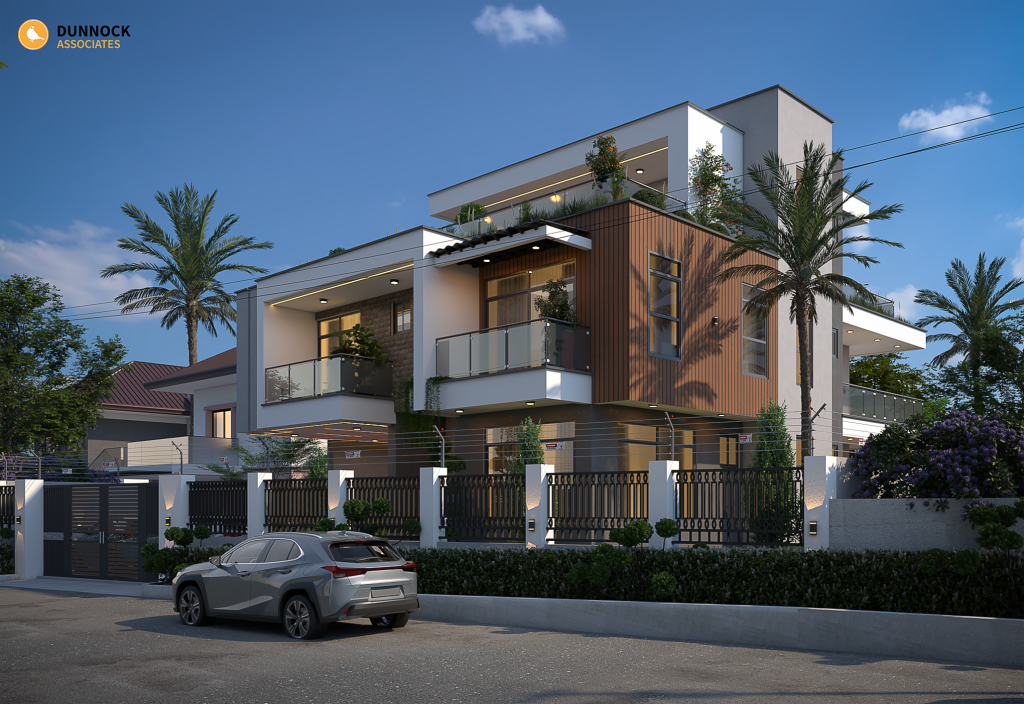
A building plan is the foundation of your entire construction project in every practical sense. Without it, your contractors are essentially guessing. With it, every measurement, room dimension, structural detail, and material specification is clearly laid out before a single brick is laid.
Here is what a properly drawn building plan does for your project:
- Prevents costly mistakes: Errors caught on paper cost nothing to fix. The same errors discovered on-site can cost tens of thousands of cedis to demolish and redo.
- Guides accurate budgeting: Contractors can only give you a reliable quote when there is a detailed plan in front of them. Vague plans lead to vague quotes, and eventual budget overruns.
- Coordinates all trades: Your mason, carpenter, electrician, and plumber all work from the same drawings. This ensures that the electrical conduits are placed before the walls are plastered, and that plumbing pipes run where they need to without cutting through structural elements later.
- Defines your vision: A plan translates what is in your head into something tangible, reviewable, and refinable before construction begins. You can see how your living room flows into your dining area, how natural light enters your bedroom, and whether your kitchen layout is functional.
2. Standards and Quality
Ghana has building codes and construction standards that all structures must meet. These standards exist to ensure that buildings are safe, structurally sound, energy-efficient, and suitable for human habitation. A licensed architect who prepares your building plan is trained to incorporate these standards into the design.
This means your building will have:
- Adequate room heights and ventilation for the Ghanaian climate
- Correct structural sizing for columns, beams, and slabs
- Proper setbacks from property boundaries and roads
- Appropriate toilet and sanitation provisions per occupancy type
- Fire safety considerations where required
Without a professionally drawn plan, your building may technically be standing, but it may not be meeting the minimum standards that protect you, your family, and future occupants.
3. Certification and Legal Recognition
Perhaps the most critical importance of a building plan in Ghana is its role in the legal certification of your property. In Ghana, all construction requires a building permit issued by the relevant Metropolitan, Municipal, or District Assembly (MMDA). To obtain this permit, you must submit professionally drawn architectural and structural drawings.
Beyond the permit, your building plan also plays a key role in:
- Land title and deed registration: Formal registration of a completed building often requires certified drawings.
- Mortgage and bank financing: No financial institution in Ghana will approve a construction loan or mortgage without seeing approved building plans.
- Property valuation: Certified properties with approved plans attract significantly higher valuations.
- Insurance: Home and property insurance policies are more easily obtained and more comprehensive when the building has approved plans.
Consequences of Not Having a Building Plan
Many Ghanaians, particularly in peri-urban and rural areas begin construction without any formal drawings. The results can be devastating, both financially and legally. Here is what you risk:
Demolition and Forced Stoppage
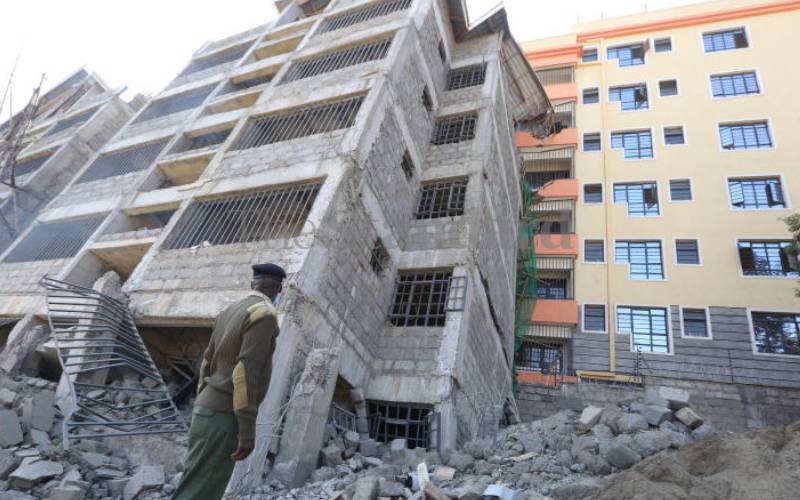
The MMDAs across Ghana have the legal authority to stop construction and, in serious cases, order the demolition of structures built without permits. Ghana has seen high-profile demolition exercises in Accra, Kumasi, and other cities where illegally constructed buildings, some of them multi-storey, were brought down. The cost of losing an entire building is immeasurable.
Structural Failures
Buildings constructed without engineering drawings are vulnerable to structural failure. Ghana has experienced multiple building collapses in recent years, often of structures that were built without any formal drawings or supervision. These collapses result in loss of life, injury, and criminal liability for property owners.
Disputes and Legal Complications
Without an approved plan, boundary disputes with neighbours are harder to resolve. Encroachments on road reserves or utility easements can result in legal battles. Future attempts to sell, mortgage, or transfer the property become legally complicated because the building has no official recognition.
Financial Loss
Ironically, trying to save money by skipping the building plan almost always costs more in the end. Rework, demolitions, court fees, penalties from the Assembly, and lost property value all far outweigh what it would have cost to engage a professional at the start.
Difficulty Selling the Property
In today’s increasingly regulated property market in Ghana, buyers, especially diaspora investors and institutional buyers are more diligent. A property without approved building plans is a red flag that will either kill a deal or dramatically reduce what a buyer is willing to pay.
How the Cost of a Building Plan Is Calculated
This is the question most people come with: how much does it actually cost? The honest answer is that there is no single flat fee. The cost of preparing building drawings varies based on a number of factors, and professionals typically charge using one of two main methods, or a combination of both.
Method 1: Percentage of Construction Cost
The most widely used approach in Ghana and the one recommended by the Ghana Institute of Architects (GIA) is to charge a professional fee based on a percentage of the total estimated construction cost of the project.
The rationale is straightforward: larger and more complex buildings require more time, expertise, and drawing work, so the fee scales with the size and complexity of the project. The Ghana Institute of Architects publishes recommended fee scales for different categories of buildings, and these percentage rates vary by:
- Type of building (residential, commercial, industrial, institutional)
- Size of the building (floor area in square metres)
- Level of complexity and design features
- Whether the client requires full professional services including supervision or drawings only
As a general principle, residential buildings attract one rate range, while commercial and industrial buildings attract another. Full architectural services which include design, drawings, and site supervision throughout construction attract higher percentages than drawings-only engagements.
Method 2: Lump Sum or Fixed Fee
For smaller or more straightforward projects such as a single-storey family home, a small extension, or a simple retail shop, some architects charge a fixed or lump sum fee agreed upon before work begins. This gives the client cost certainty from the start.
The lump sum will typically reflect:
- The number and types of drawings required (site plan, floor plan, elevations, sections, structural drawings, services drawings)
- The number of revisions included
- Whether structural engineering drawings are included or quoted separately
- The experience level and reputation of the professional
What Affects the Cost
Beyond the charging method, several project-specific factors will influence what you ultimately pay:
- Project size and scope: A single-storey, two-bedroom house requires far fewer drawings than a four-storey apartment block. More floors, more rooms, more complexity equals more work, higher cost.
- Type of building: Residential projects are generally less complex than commercial or industrial ones. A factory, hospital, or hotel requires specialised design knowledge and more detailed drawings.
- Location: Professionals based in Accra, particularly in areas like East Legon, Airport Residential may charge differently from those in regional capitals or smaller towns.
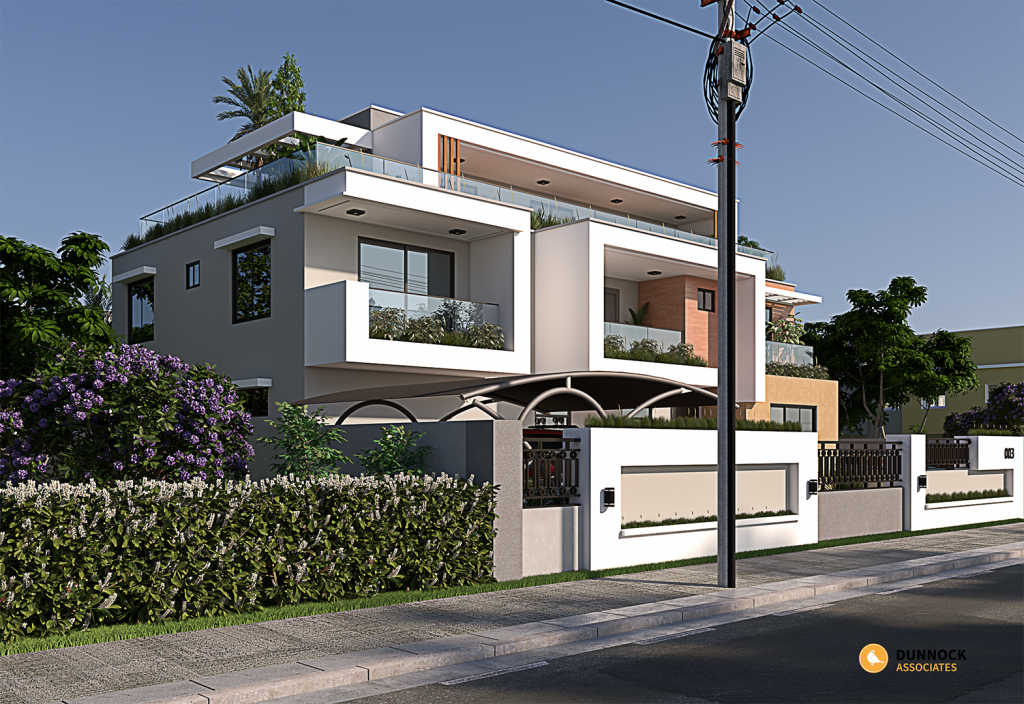
- Level of customisation: A bespoke, architecturally designed home will cost more to document than a design adapted from a standard template.
- Services included: Architectural drawings alone are one cost. Add structural engineering drawings, mechanical, electrical, and plumbing (MEP) drawings, and the cost increases. Full project supervision is an additional service on top of drawings.
- Experience and qualifications of the professional: A registered architect with the ARB (Architects Registration Board) and membership of the Ghana Institute of Architects will typically charge more than a draftsperson and bring corresponding expertise, accountability, and professional indemnity.
- Permit processing: Some professionals include assistance with obtaining the building permit from the MMDA as part of their service; others charge this separately. The permit itself also carries a fee payable to the Assembly.
Drawings-Only vs. Full Architectural Services
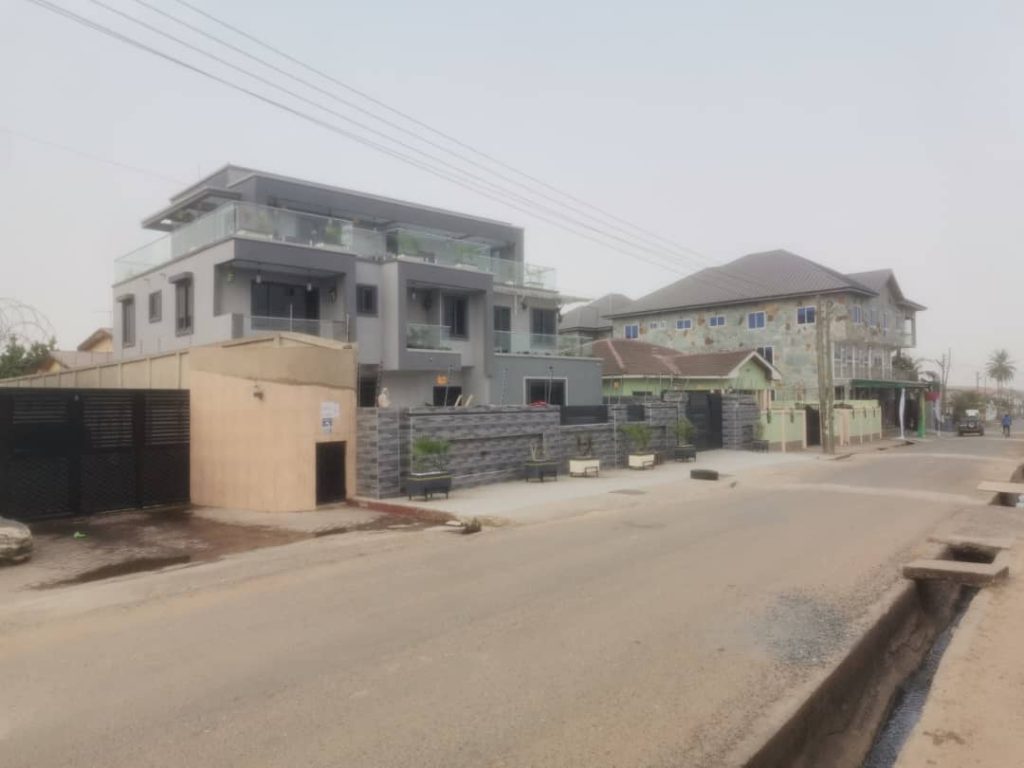
It is important to understand that drawing a building plan is typically just one component of what an architect offers. Full architectural services span from the initial concept and design through detailed drawings, permit processing, and site supervision during construction. Each phase has its own fee or is included in an overall professional engagement.
Many clients in Ghana engage architects for drawings only and manage the rest themselves. This reduces professional fees but also removes professional oversight during construction, which is often where quality issues emerge.
Conclusion
Drawing a building plan in Ghana is not a luxury or a bureaucratic formality, it is a fundamental step in any serious construction project. It protects your investment, ensures your building is safe and legal, and gives your property the formal standing it needs to be mortgaged, insured, sold, or inherited without complications.
The cost of a building plan varies with the size, complexity, and type of your project, and professionals typically charge either a percentage of the construction cost or an agreed lump sum. In either case, what you pay for professional drawings is a fraction of what you risk by proceeding without them.